
The Identity You Inherited
Much of who you are was not chosen. Adulthood is partly the long work of figuring out which parts to keep.
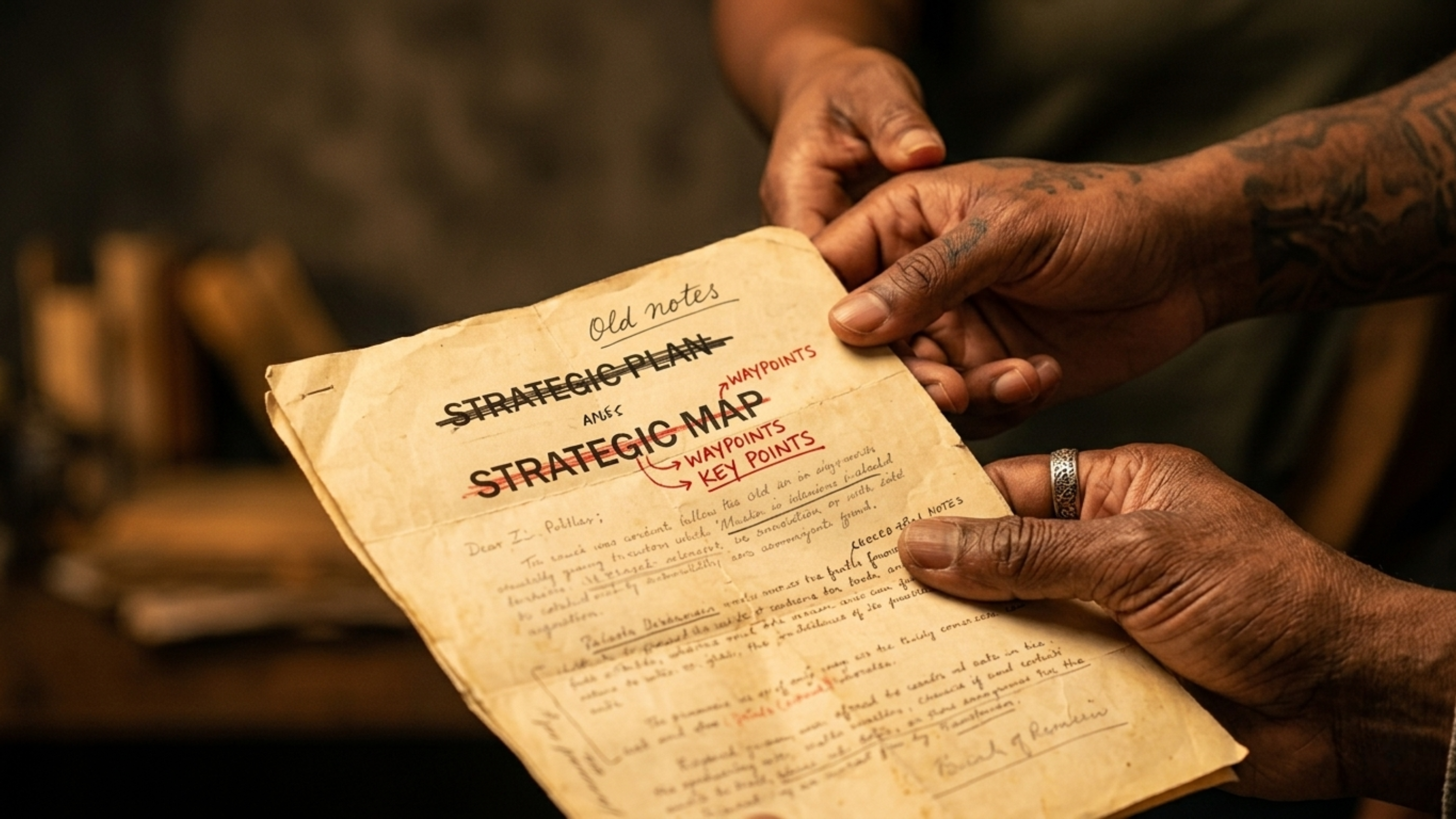
There is a conversation I keep having, in different forms, with different people, across different contexts.
It usually starts with something like: I don't know why I keep doing this. I've known for years that it's not working. And I still can't seem to stop.
And after some time together, we usually arrive at the same place.
They are not just carrying a habit. They are carrying a story. And the story was not written by them.
The script that was handed to you
By the time most people reach adulthood, a significant portion of their identity was already in place. Not chosen, not examined, just absorbed.
From family systems, they learned what role was theirs to play. The responsible one. The peacemaker. The one who keeps things together. The one who doesn't make a fuss. These roles are not assigned consciously. They emerge through the dynamics of belonging. You do what keeps you connected to the people you need.
From culture, they absorbed norms about what is appropriate, what is dangerous, what is possible for someone like them. Some of these norms are life-giving. Some are quietly limiting. Most go unexamined because they feel like reality rather than perspective.
From their earliest relationships, they formed what psychologists call internal working models: deep, largely unconscious expectations about whether they are worthy of love, whether others are safe, whether asking for what they need is allowed.
None of this is anyone's fault. This is how human beings develop. We are meaning-making animals, and we make meaning early, quickly, and durably, because our survival depends on understanding our environment before we have the sophistication to question our conclusions.
The problem with inherited identity
The problem is not that you were shaped by your history. Everyone is. The problem is when the shaping that happened in one context keeps running in a completely different one.
The person who grew up in a household where emotions were dangerous learns to manage their inner world tightly. That was intelligent adaptation. In adulthood, in a relationship with a partner who genuinely wants emotional access, or in a leadership role that requires authentic presence, the same strategy becomes a liability.
The person who learned that standing out invited trouble makes themselves small in rooms they should be owning. The one who learned that love is conditional achieves relentlessly, then wonders why arriving never feels like enough.
Viktor Frankl wrote in Man's Search for Meaning about the last of the human freedoms: the ability to choose your response in any given set of circumstances. What he did not fully explore is how that freedom is constrained by the stories we do not know we are carrying. You cannot choose your response to something you cannot see.
Seeing the inherited identity clearly is the work that comes before the choice.
The grief most people skip
Here is the part that does not get talked about enough.
Recognising that some of your identity was inherited and does not serve you anymore is not just an intellectual exercise. For many people it involves real grief.
Because the inherited identity is connected to the people who handed it to you. Family. Community. Culture. The people you love, or wanted to love you, or were shaped by whether you wanted to be or not.
Letting go of an inherited identity can feel, on some level, like a betrayal. Like saying the people who shaped you were wrong. Like leaving something behind.
I have worked with people who intellectually understood that a belief they were carrying was limiting them and still could not release it, not because they lacked insight, but because releasing it felt like a kind of severance they were not ready for.
This is not weakness. This is the human cost of being shaped by relationship. The beliefs and patterns that were handed to us came packaged with belonging. Untangling them requires gentleness, not just analysis.

Choosing what to keep
There is a distinction I want to be careful to make here.
The work of examining your inherited identity is not the work of dismantling your heritage. Not everything handed down to you is a constraint. Some of it is gift.
Values, ways of seeing the world, capacities for resilience, senses of humour, relational warmth, spiritual depth. These can be inherited too, and they are worth keeping, worth claiming consciously rather than just carrying passively.
The question is not: what did my past give me that I should discard?
The question is: which parts of who I have been are actually mine, chosen, aligned with who I am trying to become, and which parts am I carrying out of habit, obligation, or fear?
That is not a question you answer once. It is one you return to over a lifetime.
But you have to start somewhere. And the starting point is usually the willingness to look honestly at the script without immediately defending it or condemning it.
Just read it. See whose handwriting is on which parts. And then, deliberately, decide what you want to write next.
Understanding the inherited layers of your identity is part of what The Forge Program is designed to work through. The strip phase exists precisely for this: naming what has been running you, seeing where it came from, and deciding what stays.
Go Deeper
See where these patterns show up in your own life.
The Petty Audit is a free 25-question diagnostic that identifies your top 3 identity-level blockers.